Upskill your team through AI roleplay practicebuilt on your own scenarios.
An AI plays the other person. Every session ends with a scored breakdown of how you actually came across.
app.pokamind.com/session

A real session. Four channels are read while you talk: words, voice, face and body.
A KTH Royal Institute of Technology spin-out
Used by teams at BioInvent, ABB and Career 180. Backed by Vinnova and Almi. Featured in Dagens Nyheter.
What happens in practice
Four steps, and the whole point is step three: feedback specific enough to act on, then another attempt.
It starts with the conversation you dread
You bring the situation. The renewal that stalls, the feedback nobody delivers, the complaint that escalates. We build it from your own playbooks and policies, and we run it ourselves before anyone on your team sees it.

Your situation, with the other person written into it.
They say it out loud, to someone who pushes back
A colleague playing along will let them off the hook. This will not. It holds its character for the whole conversation and gets harder if they lead with blame, which is the part that never happens in a workshop.

A live session, being read while it happens.
They find out while they still remember saying it
Feedback lands within minutes, not at the next review. It quotes them back to themselves, names the one thing to change, and lets them run it again straight away, which is when it is cheapest to fix.

The report, quoting the words that made the difference.
You stop guessing who is ready
Every session rolls up into one view, so you can answer the question managers can never really answer today: is this person ready for that conversation, or not yet.

The manager view, with example data.
The conversations teams bring us
Seven shapes, one scoring rubric. Open one to see the scenario, who runs it, and the customer it was built with.
The renewal that went quiet
Sales and negotiation
Your reps get one attempt at the renewal call. Here they get fifty, against a buyer who pushes back the way yours do, with a scored report after each one.
See how sales teams run itYou
You are the account lead on a renewal that has gone quiet. The contract expires in three weeks and procurement has stopped replying.
The AI plays
Alex Renner
Procurement lead
Has been told to cut supplier spend this quarter, and has a cheaper quote already on the desk.
“Our sales director has set minimum margins for enterprise deals this quarter.”
Alex Renner opens.
You cannot coach what you did not see
Somebody in that meeting will ask whether this reads your people's emotions. It does not.
PokaMind reports what anyone in the room could have observed: what was said, how steadily it was delivered, whether the person stayed present. It does not guess at anyone's inner life, and it was deliberately built not to. That distinction is why it clears legal review instead of stalling in it.
- Words
Clarity
Warmth
Curiosity
Reasoning
Expressiveness
- Voice
Steadiness
Fluency
Pitch variety
Projection
- Face
Eye contact
Engagement
Smile authenticity
Relaxation
- Body
Posture
Gesture
Orientation
Energy
Whether the point landed, or only got said
Whether they sounded steady, or sounded rattled
Whether they stayed present, or checked out early
Whether they held the room, or shrank from it
communication styles
Named after every session, so two managers reviewing the same person land in the same place.
languages
People practise in the language they will be speaking on the day.
practice game types
Quick drills built from the same policy, for the parts that need drilling.
to the scored breakdown
The report is ready before they have left the room, so the retry happens in the same sitting.
PokaMind Insights
Your intranet is waiting to be opened
It is a filing cabinet that assumes somebody will go looking. Nobody goes looking.
PokaMind Insights connects to your SharePoint, reads what changed this week, and writes a short briefing with every quote checked against the source file. Your comms lead approves it before anyone receives it. Then each post carries the practice for what changed, so a new policy arrives with its rehearsal attached instead of a read receipt nobody sends.
How internal comms teams run itConnect
You choose which parts of SharePoint it can see. Nothing else.
Notice
It spots what changed this week, so nobody has to remember to go and check.
Write
A short briefing. Five items at most, none of them longer than a minute to read.
Check
It quotes your own documents, and it checks the quote before your comms lead sees it.
Practise
Each item can carry the practice for it, so a change lands with a rehearsal attached.
Enterprise platform
Rolling it out should not be the hard part
The practice is the difficult thing. Getting it in front of people should not be.
Nobody has to remember another login
Practice starts from a link where work already happens, so adoption is a message, not a rollout campaign.
It looks like your training, not ours
Run it on your own domain, in your own colours. For a lot of teams the practice works better when people do not feel they have been handed to a vendor.
Your security team gets real answers
The documentation pack, including sub-processors and data-processing terms, arrives during evaluation, not after the contract.
The four questions that hold this up in procurement
- Are you profiling our employees?
- No. The report describes what was observable in the conversation and never claims to know how somebody feels.
- Where does the conversation data live?
- Handled in line with GDPR, with data residency controls and audit logging. Your security team gets the detail during evaluation.
- Do we have to move to a new system?
- No. It embeds into Slack, Microsoft Teams and your existing learning platform through single sign on and an API.
- What if our situation is not on your list?
- That is the normal case. Every scenario is built from your own material, so an unusual one is the starting point rather than a problem.
EMORI
In pilotSome of your people are never going to log in to anything
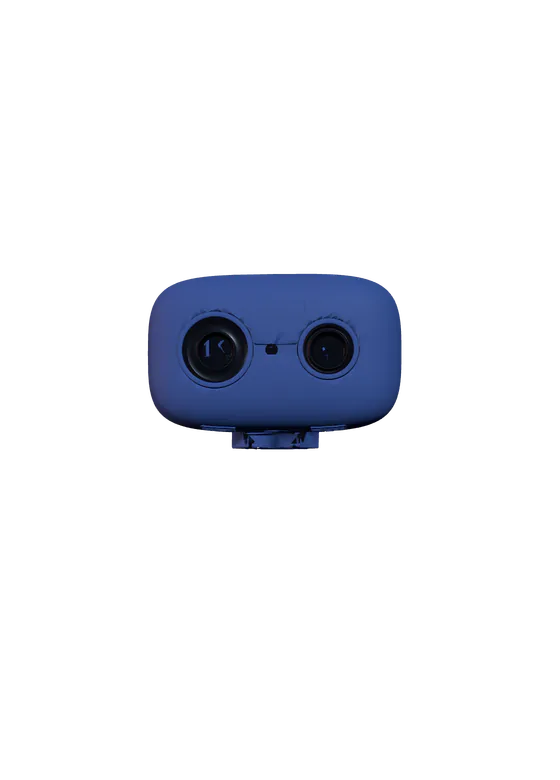
Hospital reception, the service desk, the shop floor. They are on their feet all day and share a screen with four colleagues. EMORI puts a small robot in the room with them instead, so the practice is simply there when they have a minute, in their own language.
It is in pilot with a public healthcare provider in Catalonia, funded by the European Union.
loading EMORI
It follows your cursor. Try a move below.
What teams at BioInvent, ABB and Career 180 say
L&D and people leaders, after running real teams through scored AI roleplay sessions.
Their analysis is deep and informative, drawing on learner responses, tone of voice, facial expressions, and more. They didn't just add a layer of engagement, they gave us a deeper understanding of how learners are actually grasping the core concepts.
Ali Saleh
Head of Product
Career 180
While it felt a bit unusual talking to a screen during the training, the results and feedback have been excellent. It's definitely worth it. It has created a safe learning environment for our teams.
Emma Meurling
VP Human Resources
BioInvent International AB
PokaMind was a valuable and engaging learning experience that delivered clear insights for our team. The platform proved intuitive and full of potential in supporting modern learning needs.
Maria Iuliana Maxim
Operations Academy & Development
ABB
The questions teams ask first
Straight answers to the questions L&D and procurement teams ask before a pilot. The full list is on the FAQ page.
A training course transfers knowledge, and a human roleplay partner gives people live practice, but only for the hour you can book and afford. PokaMind gives every person on the team unlimited, on-demand roleplay practice with an AI avatar that plays the other side of the conversation, plus consistent feedback on tone, word choice, and delivery that doesn't vary by who is running the session. PokaMind doesn't replace your facilitators; it is the practice layer between the course and the real conversation, where people rehearse what they have been taught before they have to use it for real.
PokaMind is designed to add practice without adding workload. For learners, a roleplay run takes minutes, happens on demand, and needs no scheduling or a partner to be free. For the people setting it up, the main lift is sharing the scenarios and materials you want practiced, which PokaMind shapes into roleplays, and once it is running, managers review progress through the dashboard instead of booking and facilitating sessions themselves.
Getting started with PokaMind is fast because the practice is built from materials you already have, such as playbooks, product docs, onboarding guides, and policies, rather than content you have to write from scratch. A team can begin with a focused set of scenarios, such as one sales motion or one onboarding path, and expand from there. Because PokaMind embeds into the tools you already use, including Slack, Microsoft Teams, or your LMS, there's nothing for learners to install or log into separately, so a focused pilot starts quickly and a broader rollout scales from there.
PokaMind is priced per organization as a B2B platform, based on the size of the team and the scope of what you roll out: which scenarios, how many use-cases, and how custom the deployment and integrations are. Because every setup is built on the customer's own scenarios and materials, pricing is quoted after a short conversation about your goals rather than published as a fixed per-seat price. The next step is to tell PokaMind about your team and the conversations you want to improve, and get a tailored quote.
Bring us your toughest conversation
Tell us the conversation your team gets wrong most
A tough sales objection, a feedback talk, a tense escalation. We'll build it as an AI roleplay and show you the exact feedback your people would get.
We build your scenario from your own materials
You see a real scored session, not a slide deck
Already trusted by BioInvent, ABB and Career 180
Get your scenario built
A few details and we'll set up your walkthrough.