
Data is only ready for AI when it is ready for a specific use. For human-facing work, that means structuring four things: the people, the knowledge, the moments and the signals.
Most organizations that try to put AI in front of their people start with their documents. They connect a model to the policy library or the sales playbook and expect it to hold up its end of a conversation. It can usually talk. What it struggles to do is play the procurement lead who already has a cheaper quote on the desk, or tell a receptionist what changed in the visiting policy this week, in words the people who own that conversation would sign off on.
The model is rarely the problem. The data behind it was written for a different job. Documents are written to be read, and a conversation needs roles, turns and context on top of them. This post defines the term we use for that missing layer, interaction-ready data, and walks through what goes into it, what stays out, and how to tell whether yours is ready.
What is human-facing AI?
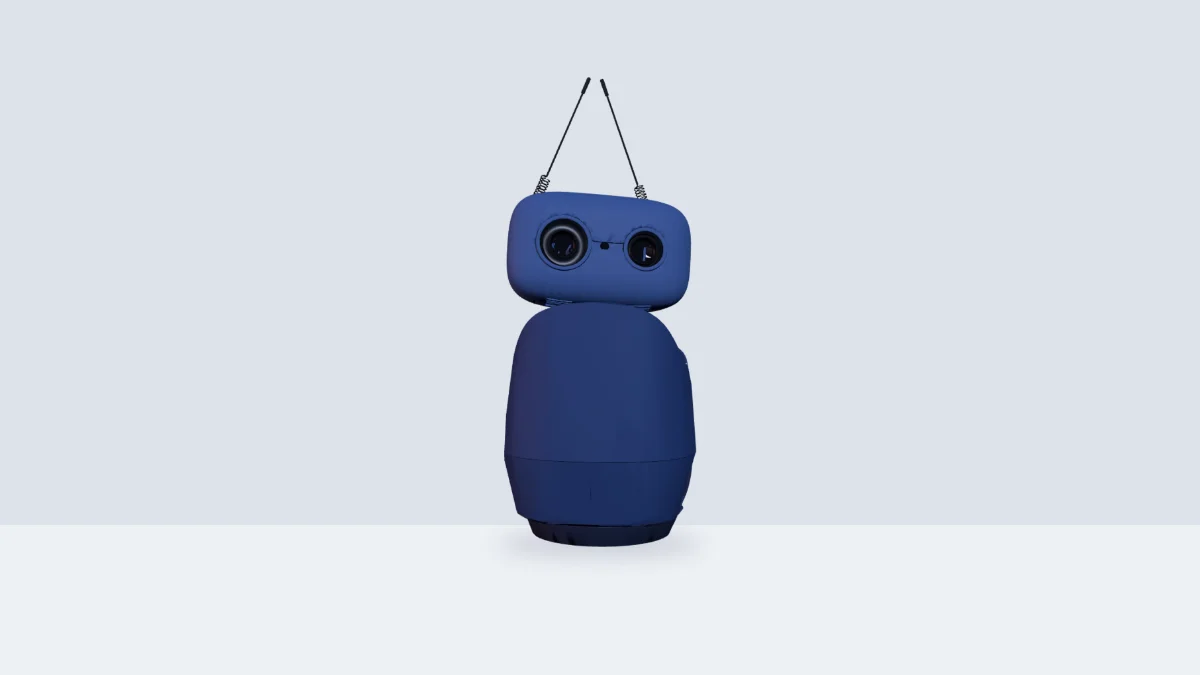
Human-facing AI is AI that a person talks to or works beside in the moment: a practice partner that plays a customer, a weekly digest of what changed, or EMORI, a desktop robot that staff practice hard conversations with by voice. Because it sits inside a conversation, it has to handle roles, turns, wording, tone and context, so it needs data structured for that interaction, not only the documents behind it.
Compare it with AI that works in the background, such as a model that routes support tickets or forecasts demand. Background AI is judged on its output, often days later. Human-facing AI is judged in the moment, by a person who notices at once when it gets the role, the policy or the tone wrong.
What does interaction-ready mean?
Interaction-ready data is an organization's knowledge and conversation signals, structured for one specific human-facing use, so that an AI can act on it and a person can check it.
Two parts of that definition carry most of the weight. The first is "one specific human-facing use". Data can only be ready for AI in relation to a specific use. A policy handbook is ready for a search box as it stands. It is not ready for an AI that plays an employee asking about parental leave, because that AI also needs to know who the employee is, what they want, what they are likely to push back on, and which passage of the handbook answers them.
The second is "a person can check it". Structure that only a model can read does not help the people who have to stand behind it. If a scenario brief says the buyer has a cheaper quote and a boss who wants savings, a sales manager can read that line and say it is wrong for their market. If a passage of knowledge keeps its source, a reviewer can open the original and confirm it. Being checkable is what lets an organization put its name on what the AI says.
Why do human-facing AI projects stall on data?
The same three problems come up almost every time an organization tries to turn its material into something its people talk to.
- Documents are written for reading. A call script assumes the rep already knows the account. A policy assumes the reader will look up the exception on page 14. Neither says how the conversation opens, what the other person wants, or where it tends to go wrong.
- The knowledge that matters most lives in people. The best account managers know which objection follows the price question. The reception lead knows which sentence settles a waiting room and which one starts an argument. None of that is in the files, so a model given the files never sees it.
- Nobody has written down what good sounds like. Most organizations can name a good outcome: a renewal signed, a complaint closed. Few have described the conversation on the way there, such as the question asked before the price, the pause after the ask, or the sentence that names the customer's concern before answering it.
A bigger model or a longer prompt fixes none of these. What fixes them is structuring the material for the one conversation it has to support, with the people who own that conversation involved from the start.
What goes into interaction-ready data?
We organize interaction-ready data in the same order every time: people, knowledge, moments and signals. One example makes them concrete: a sales renewal that has gone quiet. The contract expires in three weeks, and procurement has stopped replying.
People
Who is on each side, what they want, and how hard they push. In the renewal, the AI plays Alex Renner, a procurement lead who has been told to cut supplier spend this quarter and already has a cheaper quote. The learner plays the account lead. The same scenario can be a gentle first run for a new hire or a hard one for a senior rep.
Knowledge
What your documents say, split into passages that keep their source. For the renewal, that is the pricing and discount policy, the objection-handling guide and the notes from deals the team has lost. Each passage stays tied to the file it came from, so a reviewer can trace what the scenario says back to the page that says it.
Moments
The situations, how they open, how they turn, and the techniques that work. Alex opens in character: "I have a cheaper quote on my desk and a target to cut supplier spend this quarter. Tell me why we should renew." From there the conversation moves through stages. Alex pushes back, widens the objection, tests a solution with conditions attached, and then commits or does not. This layer also names the techniques the team is meant to use, such as asking what changed on the buyer's side before talking about price.
Signals
What can be observed in practice sessions: words, voice, face and body. When the account lead runs the renewal, the platform analyzes what they said, their pace and pauses, their gaze toward camera, smile frequency and movement.
What counts as a signal, and what does not?
A signal is something anyone in the room could have observed: what was said, pace, pauses, smile frequency, gaze toward camera, movement and gesture. Feelings are not signals, and neither is identity. Interaction-ready data can record that someone paused for three seconds after naming a price. It does not record why.
The AI Act draws the line in the same place. Its Recital 18 says emotion recognition does not include "the mere detection of readily apparent expressions, gestures or movements, unless they are used for identifying or inferring emotions." The Commission's guidelines on prohibited AI practices give the plainest example: "The observation that a person is smiling is not emotion recognition." Concluding from that smile that the person is happy would cross the line.
PokaMind is designed to stay on the observable side of that line. It is designed not to infer emotions, inner states or personality, and it does not identify anyone from their face or voice. A signal that was not captured is recorded as missing, never as zero, and the person sees it marked as not captured instead of as a low score. If the camera never saw someone's face, the record says so instead of showing a low score.
This is not legal advice. It is how we read the text, and it is the reason the platform is built the way it is.
Where does interaction-ready data run?
Once a situation is structured, it can run on more than one surface. On a screen, it runs as AI roleplay practice, drills and a team view. The person who practiced gets the full written breakdown. In PokaMind, managers see who practiced and how often, never the scores, the conversation, the transcript or the written breakdown.
On a robot, it runs on EMORI, our desktop robot, in pilot at Badalona Serveis Assistencials, a public healthcare provider in Catalonia. There, staff rehearse a hard front-desk conversation by voice while EMORI plays the visitor, then hear a short read of their own communication style. It also answers policy questions, in Catalan, Spanish and English, with no login.
Three questions to scope your first situation
Interaction-ready data is built one situation at a time, so the first decision is which one. Three questions do most of the work.
- Which conversation costs you most? Pick one where a bad outcome is both expensive and frequent: the renewal that stalls, the first call with a new account, the patient who has waited too long.
- What material already describes it? Playbooks, call scripts, policies and training material are enough to start. Where the knowledge lives in people instead of files, we structure it with them in a workshop.
- Who owns it? Someone on your side has to read the scenario briefs and say what is wrong with them. Without that person, the data is structured but nobody has checked it.
If you can answer all three, you have a scoped situation. That is where every PokaMind build starts.
Frequently asked
- Is interaction-ready data the same as AI-ready data?
- It is a specific kind of it. AI-ready data is data prepared for a particular AI use. Interaction-ready data is prepared for AI that works inside a human conversation, so it also records roles, goals, sources, the moments that matter and what can be observed.
- Does interaction-ready data include recordings of employees' real calls?
- No. PokaMind structures the organization's own material and the practice sessions people take part in knowingly. It is designed not to infer emotions, and it does not need customer records or call recordings.